Why Maintenance Matters More Than Most People Realise
Coffee machines work by forcing hot water through finely ground coffee under pressure. In doing so, they accumulate oils, fine coffee particles, and mineral deposits from tap water. Over time, these build up in the group head, portafilter, steam wand, boiler, and internal pipework.
Left unattended, these residues affect extraction quality, create unpleasant tastes, and put additional strain on pumps, heating elements, and seals. The majority of faults we see at Wolentra could have been delayed or prevented entirely with consistent, straightforward cleaning. The machines that arrive in the worst condition are almost always those that have seen the least routine care.
This is not about achieving laboratory-level hygiene. It is about keeping your machine in the condition it needs to be in to do its job reliably. The routines below are designed to be practical and achievable, not exhaustive.
Daily Maintenance
For anyone using their machine every day – whether at home or in a commercial setting – daily cleaning takes only a few minutes and makes a meaningful difference.
Flush the Group Head
Before and after each session, run a short burst of hot water through the group head without a portafilter in place. This clears out any residual coffee grounds and oils sitting in the shower screen and dispersion block. It is a habit that takes seconds but noticeably affects the cleanliness of your shots.
Clean the Portafilter and Basket
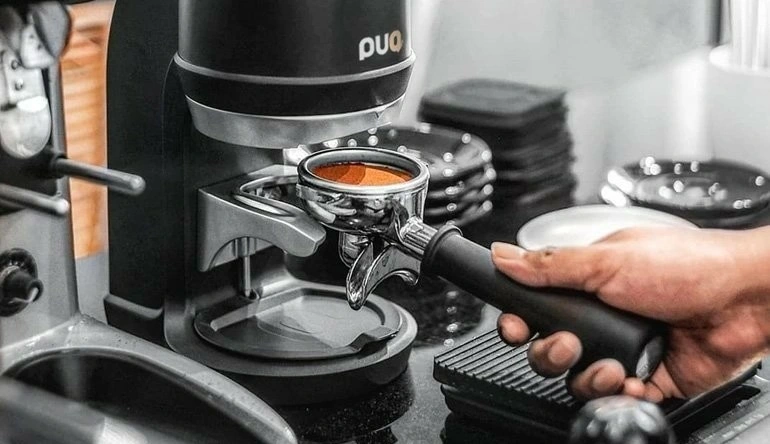
After each use, knock out spent grounds, rinse the portafilter under hot water, and wipe it dry. Coffee oils left in the basket oxidise quickly and contribute a bitter, stale flavour to subsequent shots. On espresso machines, purge a small amount of water through the group before reattaching the portafilter to remove any grounds that may have collected around the seal.
Wipe Down the Steam Wand
Milk residues on the steam wand dry to a hard film rapidly. After steaming, purge a brief burst of steam to clear milk from inside the tip, then wipe the outside with a damp cloth immediately. If milk bakes onto the wand, it can be difficult to remove and may eventually block the steam holes. On commercial machines, a dedicated steam wand cleaner is useful for keeping the internal tip clear.
Empty the Drip Tray
A full drip tray that overflows creates a risk of liquid reaching internal components. On most domestic machines, the drip tray fills faster than expected. Empty and rinse it daily if the machine is in regular use.
Top Up with Fresh Water
Using fresh water each day rather than leaving water sitting in the tank reduces bacterial risk and generally gives better flavour. In hard water areas, using filtered water also slows the rate of scale accumulation in the boiler, which is worth the small additional effort.
Weekly Maintenance
Weekly routines go slightly deeper than daily cleaning and address areas that do not need attention every day but should not be overlooked for extended periods.
Backflushing (for machines with a three-way solenoid valve)
Semi-automatic and commercial espresso machines with a solenoid valve can be backflushed. This process uses a blind basket (a solid basket with no holes) and group head cleaner – a powdered detergent designed specifically for espresso machines – to push cleaning solution back through the valve and group head, loosening accumulated coffee oils.
A typical weekly backflush cycle involves placing a small amount of cleaner in the blind basket, locking in the portafilter, and running short bursts of the pump several times, then rinsing through with clean water. The exact procedure varies by machine; consult your manufacturer's manual for the recommended cycle.
Avoid using backflush detergent more than necessary, as it can accelerate wear on gaskets over time. Once a week is sufficient for home use. Commercial machines with heavy throughput may benefit from daily backflushing.
Remove and Clean the Shower Screen
The shower screen disperses water evenly across the coffee puck. Fine grounds and oils accumulate behind it over time, affecting distribution and potentially promoting bacterial growth. On most machines, the shower screen is held in place by a central screw or presses in. Remove it, soak it briefly in warm water with a small amount of espresso machine cleaner, scrub gently with a soft brush, rinse thoroughly, and refit. Inspect the rubber gasket around the group head for wear or cracking while the screen is out.
Clean the Grinder
If you use a built-in grinder, stale grounds collecting in the chute and burrs affect the flavour of fresh coffee. Use a stiff brush to clear the chute and doser chamber weekly. Running a small amount of grinder cleaner tablets through the burrs monthly can help, though this is not necessary every week. Wipe the outside of the grinder with a dry cloth.
Wash the Water Tank
Water tanks can develop a film of bacteria or light mineral deposit if they are not washed occasionally. Remove the tank, rinse it with warm water, and wipe the interior with a clean cloth. Avoid using soap, as it is difficult to rinse out completely and can affect taste.
Monthly and Periodic Maintenance
Some tasks do not need to happen every week but should be attended to every month or every few months depending on how frequently the machine is used and the hardness of the local water supply.
Descaling
Descaling addresses the buildup of calcium carbonate – limescale – inside the boiler, thermoblock, and internal pipework. The UK has some of the hardest water in Europe in certain regions, which means scale accumulates more quickly than in softer water areas. Most manufacturers recommend descaling every two to three months for regular home use, though in very hard water areas this may be needed more frequently. Commercial machines typically require quarterly descaling at a minimum.
For a detailed guide to the descaling process, see our article on descaling: why it matters and how it protects your machine.
Inspect Gaskets and Seals
The group head gasket creates a seal between the portafilter and the machine. Over time, rubber gaskets harden, compress, or crack. Signs of a failing gasket include coffee leaking around the sides of the portafilter during extraction, or difficulty attaching or removing the portafilter. Gaskets on domestic machines typically last one to three years depending on use frequency and cleaning. Replacing a gasket is a straightforward and relatively inexpensive job.
Lubricate the Group Head Cam
On machines that use a cam mechanism to lock the portafilter, a small amount of food-safe grease applied to the cam area helps maintain smooth operation. Use only grease explicitly rated as food-safe and suitable for coffee equipment, as general-purpose lubricants can damage rubber components and are not appropriate near food-contact surfaces. This is typically a job for a technician during a service visit, but home users with confidence handling their machine can do it with care.
Maintenance Differences for Commercial Machines
Commercial espresso machines operate under significantly greater demand than domestic ones. A machine in a busy coffee shop may pull dozens or hundreds of shots per day, operate for eight to twelve hours continuously, and have multiple group heads, large boilers, and complex plumbing. The maintenance principles are the same, but the frequency and depth of each task should increase in line with usage.
Group head backflushing should ideally happen at the end of each shift rather than weekly. Steam wands should be cleaned at regular intervals throughout the day, not just at closing. Water filters should be checked and replaced more frequently, particularly if the machine is plumbed directly to the mains.
Most commercial operators benefit from a formal service schedule with a qualified technician every three to six months, covering internal inspection, boiler inspection, pump pressure calibration, and replacement of wear components. Preventative servicing of commercial machines is considerably less expensive than emergency repair when a machine fails during a busy period.
Signs That Maintenance Has Been Neglected
Sometimes people notice their machine is underperforming but are unsure whether routine cleaning will resolve it or whether something more significant is wrong. The following symptoms commonly indicate that maintenance has lapsed, though they can also point to a fault that requires professional attention:
- Coffee tastes noticeably more bitter, sour, or stale than usual without any change in beans or grind settings
- Extraction is slower than it used to be, or flow is visibly uneven
- The machine takes longer to reach operating temperature
- Steam pressure feels weaker or inconsistent
- The machine makes an unfamiliar groaning or straining sound during extraction
- There is visible limescale on external water-contact surfaces
- Water or coffee is leaking from around the group head or portafilter
Some of these can be addressed through thorough cleaning and descaling. Others may indicate a fault in the pump, boiler, solenoid valve, or seals that needs to be assessed by a technician. If you are unsure, it is generally better to get an assessment rather than continuing to use a machine that may be straining against an underlying problem.
Choosing Cleaning Products
Not all cleaning products are suitable for coffee machines. Using the wrong product can damage rubber seals, affect the taste of coffee, or – in the case of products not intended for food-contact equipment – pose a hygiene risk.
For backflushing and group head cleaning, use a powdered detergent specifically formulated for espresso machine cleaning. For descaling, use a descaling solution recommended by your machine's manufacturer or a proprietary descaler designed for domestic appliances. For general cleaning, warm water is usually sufficient; mild soap can be used on external surfaces and the drip tray but should not contact the water circuit.
Avoid vinegar as a descaler for modern machines. While it is a common suggestion, vinegar can corrode aluminium boilers, damage seals, and leave a persistent taste that is difficult to fully rinse out. Proprietary descalers formulated for espresso machines are more reliable and less likely to cause secondary damage.
Putting Together a Maintenance Schedule
The most useful thing you can do is write down a simple schedule and stick to it, rather than trying to remember. For a domestic machine in everyday use, a reasonable baseline is:
- Daily: Flush the group head, rinse the portafilter and basket, wipe the steam wand, empty the drip tray, refill with fresh water
- Weekly: Backflush with cleaner (if applicable), remove and clean the shower screen, brush out the grinder, wash the water tank
- Monthly: Descale (or every two months in softer water areas), inspect the group head gasket, clean internal surfaces not reached by daily routines
- Annually: Consider a professional service to inspect seals, valves, the pump, and the boiler
For commercial machines, each of these intervals should be shortened in proportion to how much more the machine is used. A machine pulling fifty shots a day needs proportionally more attention than one pulling five.
When to Call a Professional
Routine cleaning can be done without specialist knowledge. However, some tasks – and all electrical faults – should be handled by a qualified technician. Never attempt to open an espresso machine boiler, tamper with heating elements, or replace solenoid valves without appropriate training and equipment. Espresso machine boilers operate under pressure and require careful handling.
If your machine develops a fault you cannot attribute to a maintenance issue, or if cleaning has not resolved a performance problem, the sensible approach is to get a professional assessment. Early intervention is usually less expensive than allowing a fault to develop further. At Wolentra, we work on both domestic and commercial machines; you can contact us to discuss what you are seeing and whether a visit would be useful.